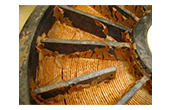
Membrane fouling
Key Features
| Membrane fouling | : | • Organic Fouling • Inorganic Fouling (Scaling) • Biological Fouling (Biofouling) Causing Agents Suspended solids, organic matter, calcium and magnesium salts, microorganisms, colloids, and metal oxides. Membrane Types Affected Microfiltration (MF), Ultrafiltration (UF), Nanofiltration (NF), and Reverse Osmosis (RO) membranes. Fouling Mechanism Pore blocking, adsorption, cake layer formation, and gel layer development on membrane surface. Effects on Performance Reduced permeate flux, increased transmembrane pressure (TMP), decreased permeate quality, and higher energy consumption. Fouling Indicators Decline in flux rate, rise in differential pressure, and changes in conductivity or turbidity of permeate. Prevention Methods Pre-filtration, coagulation-flocculation, pH adjustment, use of antiscalants, and maintaining optimized operating conditions. Cleaning Techniques • Physical Cleaning (Backwashing, Air Scouring) • Chemical Cleaning (Acid, Alkali, Oxidants, Chelating Agents) • Enzymatic or Biocide Treatment for Biofouling Operating Parameters Influencing Fouling Feed concentration, temperature, pressure, pH, crossflow velocity, and membrane material properties. Membrane Materials Commonly Used Polyethersulfone (PES), Polyvinylidene Fluoride (PVDF), Polyamide (PA), Cellulose Acetate (CA). Measurement / Analysis Methods Flux decline test, scanning electron microscopy (SEM), Fourier transform infrared spectroscopy (FTIR), and zeta potential analysis. Impact on System Efficiency Reduces productivity and lifespan of membranes, increases operational and maintenance costs. Mitigation Technologies Surface modification, nanocomposite membranes, advanced oxidation processes (AOPs), and real-time monitoring systems. Typical Application Areas Water and wastewater treatment, desalination plants, food & beverage processing, pharmaceutical production, and biotechnology. Maintenance Frequency Depends on fouling intensity; typically every 1–3 months for moderate systems or as indicated by performance decline. |
| View More Info | ||
Membrane Fouling: Causes, Types,Effects, and Control in Water Treatment Systems
Membrane
fouling
is one of the most significant operational challenges in membrane-based water
and wastewater treatment systems such as Reverse Osmosis (RO), Ultrafiltration
(UF), Nanofiltration (NF), and Microfiltration (MF). It
refers to the accumulation of unwanted materials—including suspended
solids, colloidal particles, organic matter, biological growth, or scale—on the
surface or within the pores of a membrane. This accumulation leads to decreased
system performance, reduced permeate flux, higher energy demand, and a shorter
membrane lifespan.
Understanding
membrane fouling, its causes, and prevention strategies is essential for
maintaining efficient, cost-effective, and reliable water treatment operations.
What is Membrane Fouling?
Membrane
fouling occurs when substances present in feed water deposit or adhere to the
membrane surface, creating a physical or chemical barrier that restricts water
flow. Over time, this layer becomes thicker and more compact, making it
difficult for water to pass through while reducing the membrane’s ability to
reject contaminants effectively.
Fouling
is an inevitable phenomenon in most membrane systems, but it can be controlled
and minimized through proper pretreatment, cleaning, and operational
management.
Types of Membrane Fouling
Caused by suspended solids, clay, silt, or colloidal silica in feed water. These tiny particles accumulate on the membrane surface, forming a dense cake layer that increases resistance to water flow. This type is common in surface water and wastewater applications.- Organic Fouling
Organic fouling results from the accumulation of natural organic matter (NOM), such as humic acids, proteins, fats, and oils. It typically occurs in waters rich in organic compounds or in industrial effluents. Organic foulants can adsorb onto the membrane surface and form sticky, hydrophobic layers. - Biological Fouling
(Biofouling)
One of the most problematic fouling types, biofouling is caused by microbial growth and biofilm formation on the membrane surface. Bacteria attach to the membrane, secrete extracellular polymeric substances (EPS), and form a slime-like layer that resists cleaning and disinfection. - Scaling (Inorganic Fouling)
Also known as membrane scaling, this form occurs when dissolved salts such as calcium carbonate, calcium sulfate, or silica precipitate and crystallize on the membrane. Scaling is closely related to changes in temperature, pH, and recovery rates. - Chemical Fouling
(Precipitation or Reaction Fouling)
Occurs when chemical reactions or interactions between feed components and membrane materials create insoluble compounds or residues. For example, iron or manganese oxides can precipitate and block membrane pores.
Causes of Membrane Fouling
- or biological content lead to rapid fouling.
- Inadequate Pretreatment: Insufficient filtration or
poor control of feed chemistry allows foulants to reach the membrane.
- Operating Conditions: High recovery rates, low
crossflow velocity, and extreme pH levels promote foulant deposition.
- Temperature and Pressure: Increased temperature can
enhance organic adsorption and microbial growth, while higher pressure may
compact fouling layers.
- Chemical Interactions: Improper chemical dosing or
residual coagulants can react with feed water components to form deposits.
Effects of Membrane Fouling
Membrane
fouling has a direct and often severe impact on system performance and
operating costs. Some of the most notable effects include:
- Reduced Permeate Flux: Fouling layers act as an
additional filtration barrier, decreasing water flow and productivity.
- Increased Transmembrane
Pressure (TMP): The
system requires higher pressure to maintain output, resulting in greater
energy consumption.
- Decline in Salt Rejection: Foulants can compromise
membrane selectivity, allowing contaminants to pass through.
- Frequent Cleaning Cycles: More frequent chemical
cleanings increase downtime and operational expenses.
- Shortened Membrane Life: Persistent fouling causes
irreversible damage, reducing membrane longevity and requiring early
replacement.
- Inconsistent Water Quality: Fouling may lead to fality, which is critical in sensitive industrial
applications.
Detection and Monitoring of Fouling
Early
detection is essential for effective fouling control. Common indicators
include:
- Decrease in permeate flow
rate.
- Increase in differential
pressure across the membrane.
- Changes in conductivity or
salt rejection rates.
- Visual inspection during
scheduled maintenance showing discoloration or slime formation.
Many
modern water treatment systems use real-time monitoring tools such as
differential pressure sensors, flow meters, and online turbidity analyzers to
track fouling development.
Prevention and Control of Membrane
Fouling
While
fouling cannot be completely eliminated, it can be significantly minimized
using proper design and operation strategies:
- Feed Water Pretreatment:
Coagulation, flocculation, multimedia filtration, microfiltration, or cartridge filtration can effectively remove suspended solids and organics before water reaches the membrane. - Optimized Operating
Conditions:
Maintaining suitable recovery rates, crossflow velocities, and pressure ensures stable performance and reduces foulant deposition. - Chemical Additives:
Use of antiscalants, biocides, and dispersants helps control scaling, microbial growth, and organic buildup. - Regular Chemical Cleaning
(CIP):
Periodic cleaning using acid, alkaline, or enzymatic solutions removes accumulated foulants and restores flux. - Membrane Surface
Modification:
Modern membranes are designed with hydrophilic or anti-biofouling coatings that resist adhesion of contaminants. - System Automation &
Monitoring:
Continuous monitoring of flow, pressure, and quality parameters allows early detection and prompt corrective action.
Conclusion
Membranefouling remains a major operational challenge in all pressure-driven
membrane processes. It reduces productivity, increases costs, and shortens
membrane life. However, with a well-designed pretreatment system, appropriate
chemical dosing, and careful monitoring, fouling can be effectively managed.
A
proactive fouling control strategy—combining mechanical, chemical, and
operational approaches—ensures consistent performance, lower maintenance
costs, and extended membrane lifespan. Ultimately, the key to success lies in
understanding the fouling mechanisms and implementing preventive actions before
severe buildup occurs.
| Membrane fouling | • Organic Fouling • Inorganic Fouling (Scaling) • Biological Fouling (Biofouling) Causing Agents Suspended solids, organic matter, calcium and magnesium salts, microorganisms, colloids, and metal oxides. Membrane Types Affected Microfiltration (MF), Ultrafiltration (UF), Nanofiltration (NF), and Reverse Osmosis (RO) membranes. Fouling Mechanism Pore blocking, adsorption, cake layer formation, and gel layer development on membrane surface. Effects on Performance Reduced permeate flux, increased transmembrane pressure (TMP), decreased permeate quality, and higher energy consumption. Fouling Indicators Decline in flux rate, rise in differential pressure, and changes in conductivity or turbidity of permeate. Prevention Methods Pre-filtration, coagulation-flocculation, pH adjustment, use of antiscalants, and maintaining optimized operating conditions. Cleaning Techniques • Physical Cleaning (Backwashing, Air Scouring) • Chemical Cleaning (Acid, Alkali, Oxidants, Chelating Agents) • Enzymatic or Biocide Treatment for Biofouling Operating Parameters Influencing Fouling Feed concentration, temperature, pressure, pH, crossflow velocity, and membrane material properties. Membrane Materials Commonly Used Polyethersulfone (PES), Polyvinylidene Fluoride (PVDF), Polyamide (PA), Cellulose Acetate (CA). Measurement / Analysis Methods Flux decline test, scanning electron microscopy (SEM), Fourier transform infrared spectroscopy (FTIR), and zeta potential analysis. Impact on System Efficiency Reduces productivity and lifespan of membranes, increases operational and maintenance costs. Mitigation Technologies Surface modification, nanocomposite membranes, advanced oxidation processes (AOPs), and real-time monitoring systems. Typical Application Areas Water and wastewater treatment, desalination plants, food & beverage processing, pharmaceutical production, and biotechnology. Maintenance Frequency Depends on fouling intensity; typically every 1–3 months for moderate systems or as indicated by performance decline. |
|---|
(0)
Login To Leave Review
Related Products
EMI Details
T&C